Showing posts with label review. Show all posts

Sunday, 8 May 2016

WTF Knits

WTF Knits by Gabrielle Grillo and Lucy Sweet, is one of the low-hanging fruit of the knitting book world, sometimes it is easy to mock patterns and to find them ridiculous.  To me some of these fall into 3 categories, Art, actually clever if you think about it and lastly they're strange adventures in using yarn.

It seems to be coming from a place where yarn is only good if it's used for a utiliarian project and not in sculptural projects and as some of the profits from this are going to charity it would have been hard for many of the copyright owners to refuse use of their photos for use here.

Much of it is stuff I'd never knit but I found some of it more clever than WTF.  It did annoy me to see the TitBits in here.  These are pieces knit for women with Breast Cancer as soft, caring, replacement prosthesis while they're healing and need something soft and the idea that someone would do that for me appeals, also the knitted falopian tubes are being used in activism.

Much of the garments are insane and I couldn't see myself wearing or making them but Haute Couture is insane, the yearly fashion design student catwalk is full of garments that will never be worn outside of the runway, but the authors of this choose to mock rather than to ask why fashion is so out of touch with reality, why it's almost compulsary for designers to make garments with no function (though it could also be asked why companies are making fortunes from making shoes that are crippling people more comfortable!).

Overall this book just made me slighly annoyed, yes there are knits in it that I have no idea why they were even conceived but there also knits that I can see could be used for education or entertainment. Kids get fake food toys all the time we don't seem to question it as much when we get it from a shop, or see it in a gallery, but we seem to question it a lot when someone who isn't part of the artistic establishment chooses to make it themselves.

I still don't understand some of them, but I also sometimes don't understand modern art, I wouldn't choose some of it for my house or to knit it myself (unless hugely bribed, and it would have to be huge) but each to their own.

I got this one from the library a while ago. Dublin City public libraries employ me and provided this book, I get no added inducements for doing this above my salary, access and generous lending facilities

Wednesday, 13 March 2013

Review: the Cool Girl's guide to Crochet

Book Depository; Dublin City Public Libraries; Ravelry

By Nicki Trench
9781405473187

This one is aimed at teenagers and folks in their 20's opening with a chapter entitled New-age Crochet.  Much talk about it no lomger being associated with black-clad grannies of Southern Europe. This leads into a section on how it's now hip and cool and if you're a man you can use it to pick up girls. Can you see the eye-roll that induced? Then "crochet is so much easier than knitting" and I started to realise that this really wasn't being marketed at me. The closing quiz is full of puns.

Rapidly leaving that chapter I flicked through the what you need and what to do with it chapter which has a pretty good run-down of yarns and what they're good for, apart from the slightly smug "if you buy a woollen garment that has been hand knitted or crocjeted in South America, it is sometimes rough on the skin and may even have bits of wood and straw tangled up in it that haven't been removed at the fleece combing stage; it seems the South Americans are less concerned with the roughness of some garments, maybe because they use these as jackets or over-garments and wear something else underneath them." or maybe it's all they have and can afford? Or maybe they keep the nicer stuff for themselves and sell what the tourists are willing to buy...

First steps in crochet are covered with a right-hand assumption there is no mention of the possibility of left-handed knitting that I noticed. There is a mention of the differences between UK & US terms.  There's plenty of good photographs of techniques here.

Part three are patterns with a preamble talking about them and how they could be adapted.

First up is a beanie hat using three basic stitches it's a pretty good beginner piece. Worked in an Aran yarn with a 4.5mm hook

A flower throw is up next using a granny-square variation, seamed with a double crochet seam, worked in an aran-weight yarn with a 6mm hook

Next is a simple shawl in Rowan Kid Silk Haze and a 3.5mm hook

A pet's playmat is up next with a fringe, in aran-weight yarn and a 4.5mm hook

Summer flower camisole has simple appliqued flowers sewn on after making this garment that's worked in pieces and then seamed. Worked in 4ply cotton

A stripy dog blanket worked in an Aran-weight yarn and a 5mm hook would make a great stashbuster.

Striped hairbands have a tie fastener worked in Rowan Handknit Cotton and a 3.75mm hook

A bag made with debbie bliss cotton dk and colinette point five, a mesh bag that some may want to line, uses 3 & 5mm hooks.

A tie bolero is up next in debbie bliss baby cashmerino and 2.5, 3.25 & 3.5mm hooks, made in pieces.and sewn this can be tied around or in the front.

flower power beaded belt links flowers with robust beads and ties with a ribbon, worked in Dk cotton and 4.5mm hook

Summer brimmed hat is a floppy hat with an applique flower and contrast trim, Rowan handknit cotton with a 4mm hook and cotton glace and a 2mm hook for the flower, I suppose, check for errata on this one.

Daisy cashmere scarf uses granny-square variations sews them together and adds pompoms. Debbie Bliss baby cashmerino and a 3.25mm hook

Fingerless gloves in Debbie Bliss Alpaca Silk Dk and a 3.75mm hook

Beaded purse uses aran yarn and a 3mm hook. It has a contrast frill and handle

Ribbon slippers have a ribbon threaded through the top and flowers sewn on. Worked in a chunky yarn for the body with 4.5mm hook and a dk yarn and 3.25mm hook for the flower.

Hot water bottle cover is pieced, in big wool and a 5.5mm hook, personally I'd be inclined to work it in the round.

Cushion cake two worked pieces, joined with a frill and decorated with s flower. Worked in aran-weight yarn and dk for the flower and 5mm & 3.25mm hooks.

Loopy cushion is worked in aran-weight yarn with a plain back and some contrast stripes, worked in pieces using a 5mm hook

Clutch bag with bow is worked in dk yarn with a 4mm hook and lined. Note the lining isn't included in the materials list

Last pattern are placemat and coaster worked in cotton with 5mm hook

The book finishes with a love questionnaire, to which I have to ask why? Also knitty magazine makes an appearance in the useful websites list but not ravelry and a quick look at the copyright page reveals that it was originally published in 2006, this edition is 2011, so double check the resources.

I wasn't terribly impressed, but then I'm not the market for this, which also would mean that it probably would be short-lived in someone's collection.

I got this from Dublin City Public Libraries who pay my wages, but have offered no other inducement to reviewing this book. Many thanks to the Cataloguers who pass Knitting and Crochet books on to me.

Wednesday, 13 February 2013

Review of Learn to knit, love to knit


Book Depository; Dublin City Public Libraries; Ravelry

Learn to Knit, love to knit
Anna Wilkinson
With some clear diagrams on how to knit and 20 modern styled patterns this isn't a bad book, it's not my style, but if I was starting out the opening how-to photographs are worth it. I have similar patterns to any of the ones that attracted me elsewhere in my collection. The lack of schematics for the clothing is somewhat annoying, though there are fairly detailed lists of sizing info, including bust, length, and sleeve seam. Most patterns go up to 14 or 16 UK sizing (38-40 Inch or 97-102cm)

First section is learn to knit: First up is a striped scarf and mittens, with pompoms. Knit in superbulky weight yarn. Varying stripes that can be decided by the knitter.

Shopper with dropped stitch detail is not bad, knit in bulky weight yarn, a slightly complicated technique made easy by it not being crucial if you err.

Wristwarmers with contrast rib feature on the cover, knit in DK weight. the contrast colour is used for the cast-on as well.

His or hers bobble hats - bulky weight hat with pompom

Hand Puff and collar with embroidery, knit in a superbulky weight bouchle yarn. The embroidery produces a slightly tartan effect. Puff (or Muff as we used to call them before it became slightly rude) is also padded and lined.

Simple round neck sweater with raglan sleeves. This sort of simple jumper is crying out to be made in the round and the yoke done as one piece, but alas, it's made in pieces and seamed. Dk weight yarn.

The Cripped cardigan with cabled sleeves - I can hear some of my friends already mocking the bobbles in the pattern, round necked from the sizing on the models I'd be inclined to be very careful with sizing and probably make it much longer. Then again I dislike over-tight cardigans that gape. Knit in pieces, dk weight yarn

Lace collar with tie fastening, button detail to front, tie to back, an ornamental collar in laceweight yarn.

Lace top with bow, vertically striped sleeveless top made in mohair, with a bow.

Random Striped Sweater, horizontally striped raglan in dk weight, plain sleeves with contrast cuffs.
Second section is love to knit

College-style cardigan with patch pocket, knit in 4ply, with a textured stitch, if I was making this I'd make it bigger, longer, and I'd be really careful about the placement of the patch pocket.

The Shawl Collar Cardigan with floral embroidery is knit in a dk weight yarn, v-necked this one would tempt me, longer again, probably in the round the photographs have the intarsia/swiss darned/embroidered parts looking quite puckered, you'd need to be very careful with this one to make sure that the stretch when embroidering equals the stretch when wearing.

The Fair Isle Band Sweater with short sleeves I like the pattern but very boxy, knit in DK weight. Pieced.

Textured Cardigan with ribbed waist, knit in dk weuight this has no full-length photo near the pattern. it looks interesting but this is where I would like to see a schematic.

Fair Isle Rib tanktop, I assume this 4-ply tanktop comes to approximately the waist. for me this would be too short, I'd do another repeat of the pattern for extra length.

Cabled Tam and Snood, bobbly cables knit in a dk weight yarn.

Polka-dot socks. Polka dots added as french knots afterwards. These have ribbing at the back of the leg, which can be very good for folks like me with wide calves. The heel is knit plain, I'd do a slip stitch heel, but then again I live in boots.

Cabled Cardigan with short sleeves (and frilly collar) I like the main pattern of this one. the pattern includes instructions on making the buttons, this one could be very nice in a cotton yarn. At first glance I liked this one but the collar wouldn't suit me.

Tartan sweater with three-quarter length sleeves - knit in 4-ply this is and interesting design and one of the few I would think about knitting but then I looked at it again and I'd have to play with it to make it work right. Some day I may make a variation inspired by it. Ribbed portion of the side gusset helps make it more fitted.

Tweed cape - worked in a slip stitch in DK weight yarn, the shoulders look a bit funny to me in this and would definitely not flatter me.

Got a copy from Dublin City Public Libraries who pay my wages but aren't affiliated to my blog

Monday, 28 January 2013

Review: Simply Crochet

So I picked up a copy of the latest Crochet Magazine on the UK market, Simply Crochet. Surprisingly Easons had it in stock, they're legendary for not getting in crochet magazines.  Very sparse Ravelry Page.

I have to preface this by saying that I actually do like their website.  It's quite cool.  Food for creative thought.

The magazine itself is along the same lines as Molly Makes, more matt than most magazines in this sector, it looks very slick.

It opens with a few pages of inspiration and trends, the first section is about Bedroom ideas.   After some atmospheric pictures there are the patterns for that set.  First A Bright Blanket; then pillowcase edgings;  then cool cushions in a granny square stripes; some bunting; a hanger cover, frames, Granny Square Lampshade, all multi-coloured and probably great stashbusters.

Some Amigurumi lovebirds are next, an extract from teeny tiny crochet

Lecchi Blanket is next, a mellow blend of colours

Magical Circles is a scarf with links, interesting construction.

You're Collared a cute collar with buttons to decorate by Jane Crowfoot

Jane Crowfoot talks about inspiraton.

Pearly Queen is in a silk and mohair yarn and over 1,000 beads to add to this soft piece, something like an old-fashioned bed jacket. Designed by Nicki Trench

A discussion of Amigurmi is followed by a cute dragon and then by an interview with Stephanie Lau

Carol Meldrum offers a mock cable cowl

Sounds Like love is a heart headphones cover by Brenda K B Anderson

Nicki Trench's Comfort Blanket is largely plain with some border detail.

Then because it's February there are hearts, a plain heart pattern; set of hearts; heart corsage, cards and gift tie; mirror hanging; heart sachets; cute bookmark.

There are some yarn reviews followed by a how to get started section. Which includes how to work left-handed

Some Bracelets are followed by an interesting hat using granny squares; Hip to be Square by Lisa Gentry

A small baby cardigan by Sirdar is pretty simple and open.

Flower Power is a motif pattern

Heart & Home is a backing for a hook board, a different piece, from the book Granny Squares by Barbara Wilder, Melanie Sturm and Stephanie Gohr

There are some reviews of Craftsy and Etsy, followed by a quick interview with four women who have make crafting their living.

Strangely there's another Crochet essentials set of pages with no left-handed information.  This feels like duplication.

It's an interesting magazine that I'll be keeping an eye on; most of the patterns in this issue weren't really my aesthetic but there were a few that caught my attention, it shows potential and I wish it well in the future.


I bought a copy for myself from Easons.

Wednesday, 16 January 2013

Knit your own zombie - review

Book Depository Link, Ravelry Link, Dublin City Public Libraries Record

By Fiona Goble

The cover of the book talks about over 1000 combinations and it's probably true.  There are 9 basic patterns, 4 mash-up ideas and that would probably give you ideas for many more.
You basically knit a head, upper body and lower body and using Velcro attach them to each other, the arms attach using press-studs.  The pieces are knit flat, seamed and stuffed individually.  The author opens each pattern with some media examples of each type. 

The first pattern is for a classic zombie.  Only one eye, removable entrails and his ribs showing this one is pretty classic. There's also a jacket trousers and a rat pattern as accessories.

Frankenstein's monster is up next.  The pattern even includes a 40mm nut and bolt. He has slightly different trousers and jacket pattern included

Then we have a zombie cop with a thigh-bone truncheon, shirt, trousers, hat, boot and simple cuffs.

The village idiot mash-up shows how you can use a variety of the patterns to create a new monster and maybe spark some ideas

Zombie fatale is the first female character we encounter.  Her heart is removable and she has shiny bead nails.  A beehive hairdo  topped with a hat and a dress completes this ensemble.  She also has a shoe and bandage

Dracula makes an appearance too, looking quite like Sesame street's count. He has a cane, waistcoat, cape and a bat as accessories

Next we have another mash-up, the mother of the bride, another opportunity to mix and match

The zombie chef is quite scary with full chef gear including two knives.

Next up is the biker chic zombie mash-up.

Zombie gravedigger owes a lot to Baron Samedi described as female because of the purple hat, this animated skeleton screams voodoo to me.  Hat, spade and rope accessories.

Zombie rock star has removable brains and long hair, along with a jacket and trousers.

Last mash-up is of yoga zombie mostly using the zombie gravedigger parts.

Final pattern is for the bandages to make any of the zombies into a mummy.

In common with a lot of her books you have to be prepared to do some sewing with this and there's a fair bit of both sewing and detail embroidery to keep a lot of people busy.  Would be a great gift for a zombie lover or for something to make for one.  You could get several birthdays out of making parts on a regular basis.

Saturday, 12 January 2013

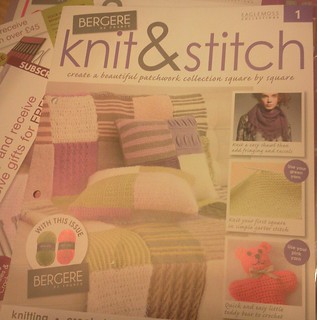
Bergere de France Knit & Stitch Volume 1 review


Yes, I have poor impulse control when it comes to buying this sort of thing.  I usually buy at least issue 1.  This is the latest offering from Eaglemoss as a part-work.  Now I hope Eaglemoss have improved their deliveries because the last few times I subscribed to something from them it resulted in blood-pressure heightening phone calls to try to sort out issues about missing shipments.

The bumpf does mention free shipping in the UK but doesn't mention what the cost would be to Ireland (or Eire as they style it).  This issue is 1.99 (UK 99p) the second will be 3.99 (UK £2.50) and subsequent issues will be 6.99 (UK 4.50), this price works out pretty well to Eason's current 7.49 for a £4.99 magazine.  You might think about using something like Parcel Motel to ship to Belfast if that would work out cheaper, you get the magazines in lots of 4. So you will be waiting anyway.

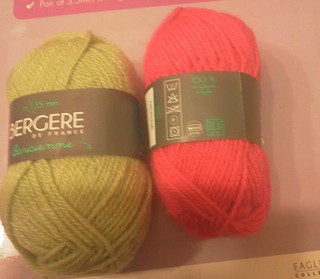
yarn from new magIssue 1 comes with two balls of acrylic yarn, Bergere de France's Barisienne, issue 2 will be offering the same, issue 3 will be Eclair yarn.  Now somehow I don't think you'll be getting some of the Alpaca yarn mentioned in the guide to yarns used in this collection but I could be proven wrong.

It also comes with some 3.5mm needles, the recommended size for the yarn, a how-to-knit DVD and the magazine, along with the guide to the yarns, which I would carefully store for substitution purposes, as well as a lot of bumpf on the series.

knit & stitch coverThis part-work promises to cover not only knitting and crochet but also tapestry, crewelwork and felting.  They say that there will be needles and crochet hooks with the series and binders along the way.
Part 1 starts off with how to cast-on, using the thumb or long-tail cast-on.
A plain garter stitch is the first square, using one of the balls, the squares are 20cm each and while tension isn't terribly important, it is a good thing to practice how to achieve tension on.  Cleverly they suggest labelling the square with an ID number.
There's also a fringed shawl knit project, using a slightly fuzzy yarn, an increase on the rs row until x number of stitches are achieved and then decrease back down to the original number of stitches, unhelpfully it's not diagrammed.

The next project is a cuddly teddy, crocheted using the other ball of yarn, this does have a schematic.

A Classic V-necked jumper for kids from 4-16 is next, schematic included, this is knit in pieces and has a simple rolled neck edge.  A good plain jumper.

A squared cushion is a tapestry piece inset into a cushion.  

Next up is a know-how piece on reading a pattern card and what their measurments are for each size etc.  Seeing as they use the French and European number sizing this is going to be useful if you're going to use this series at all.  They also include a list of reference abbreviations, I'd be inclined to get this laminated, or buy a second copy to do up a laminated version of this one and have it at the front of the collection.

Crochet basics are done as well, right-handed of course.  To round out the magazine there's a basic guide on Tapestry basic half-cross stitch and tent stitch. Both of which look the same on the front but there's a bit of a difference on the back.

So will I be buying it? The jury is still out, I'll probably buy the first three to see what happens, and to have the binder in case I impulse buy some more.  I do like the idea of one ball for the throw and one for another project.  This could be an interesting series to watch.

Sunday, 2 December 2012

Rowan Crochet Workbook review


Crochet Workshop - Rowan (Book Depository Link)
Ravelry Link
Dublin City Public Libraries have copies which is where I picked up my copy

Text links are to the patterns on Ravelry.
The presentation of this book is quite good, spiral bound makes it easier for beginners, however it's not a book for left-handed crocheters.  Right-handedness is assumed and there's no real mention of using a mirror or that it's possible to crochet left-handed.

The edition I read is the one on the Amazon.co.uk site and it was in UK crochet terms with a note about the US terms and conversion notes.

Workshop one takes you through some stitches like slip-stitch, double, half-treble, trebles and double trebles you then have a four-stitch coaster practice piece.

Workshop 2 - Stripes are explained next followed by a mixed-yarn striped scarf

Edgings are explored, with some simple patterns, a discussion of edging other fabrics with crochet.

Seaming comes up next, with a patchwork cushion cover to practice crochet seams.

Workshop 3 brings in shaping and working in the round, and some simple flowers. Project four is a Cloche hat with a flower.

Afghan Squares are explored with a couple of different types, often referred to as Granny Squares.  Project five is a Wagon wheel throw, with 188 motifs needing sewing up afterwards.

Workshop 4 takes you through creating textures, lace and some colourwork.  Project six is a crochet belt, covered in crocheted flowers.  Colourwork is used in some variety for the felted pots.

Workshop 5 is about garments and finishing. Project eight is a Baby Matinee Jacket, project 9 is a baby dress. After a piece about finishing with crochet button techniques and pocket techniques there's a woman's cardigan in a very simple stitch.  Short sleeved and made in pieces.

Workshop 6 is about embelishing crochet. Beads, felting and embroidering.  Project 11 is a crocheted necklace with beads. Project 12 is a felted bag with corsage, sewn after felting.

Most of the yarns used in the projects are dk or lighter.

Apart from the caveat about left-handed crocheters it's not a bad book, if you were looking to get into crochet it would be a good lead-in and after doing the projects you would have a good idea of what you were doing with a hook.  The photographs are clear but I don't think that they use enough of how Crochet can be done three-dimensionally, seams are ever-present where perhaps they aren't absolutely necessary.

Saturday, 21 July 2012

My Grandmother's Knitting


Book Depository Link, Ravelry Link Dublin City Public Libraries link

Errata Link here

I borrowed this from Dublin City Public Libraries, who pay my day-job wages.

A book with a slightly different slant,  a variety of knitting designers describing their relationship with their grandmothers, grandfathers and other ancestor and designing something inspired by their relationship with the knitting those who came before them taught them.  There are also some other patterns created by designers without a full story attached.

They're quite a bit of a mix of patterns and many of them echo older times, there are a few I would be interested in knitting but it's more of an interesting introduction to some of the designers, some known, some lesser known.

The first half of the book are the stories, the second is the patterns.
Designer and pattern links are to Ravelry.

Larissa Brown introduces it with her own story, the remainder of the stories are written in the third person.  Her pattern is the Family Tree Afghan

First up is Wendy Bernard who talks about her grandmother and her sculptor grandfather, finishing with her sadness in not being able to share her success.  Her pattern is Helen & Wendy's Slippers

Pam Allen discusses the memories her grandmother incorporated into her quilts and offers a Chickadee Cowl, a big lush cowl that reflects her mission to rescue the New England Mill that makes the Quince & Co yarns now.

Meg Swansen discusses her famous mother Elizabeth Zimmermann and about learning to knit and the legacy of such a famous mother.

Ysolda Teague discusses her grandfather who knit and who skewed her view of who knits in a family. He handcrafted violins and programmed using punch-cards for the paper mill he worked for.  Her pattern is Fiddler's Mitts

Jess Marshall Forbes is interviewed as one of the brains behind Ravelry, something which has changed the world of knitting.

Kay Gardiner is half of the Mason-Dixon Knitting blog and she talks about the example of simplicity that her grandmother left her with.

It came to me as no surprise that Joan McGowan-Michael had a stylish grandmother and that she was an inventive creator of her own clothes.  There was a tradition there that gave her support.  She offers the Angelina Shrug

Kirstin Spurkland  talks about her father and his Norwegian heritage that still inspires her. She designed the Rose & Cross Pullover

Teva Durham talks about her bigger-than-life grandmother Minerva who taught her that if she had to try and see vision and make it happen.  Her Minerva bonnet is inspired by a picture of her grandmother.

Jared Flood talks about his father's relationship with creativity and about how the wallpaper creativity of his mother's quilts became art as he studied  art and realised how they actually were beautiful in their own right.  His design is the colourful Tilden Baby Hat

Nora Gaughan talks about growing up in a house of artists and how if she thought of doing it that it was possible and how hard it was for her to have patience to learn how to knit.

Anne Hanson whose grandmother knit her an afghan that she still has.  Her pattern is the Crocus Patch Blanket

Leigh Radford remembers her honorary aunt Edna who taught her that it was okay to knit and how playing with fiber or playing with paint she regards it all as art.  Her pattern is Edna Slouch Hat

Chrissy Gardiner remembers gardens.  And while she doesn't remember learning to knit but remembers working with yarn.  Her pattern is Twining Vines Pillow

Adrian Bizilia remembers her grandmother carving out time to knit every day.  Inspiring Adrian to create yarn and complex patterns.

Kirsten Kapur whose life was full of women who created  and worked with colour so her concept of colour reflects these colourful women.  Her patterns are crayon cowls

Emily Johnson talks about her family trunk project, where she explores her family's past and creates patterns inspired by the people from family.  Her project is the 'Olina Socks

Keepsake Scarf by Rodger P. Murry - designed to use up some memory yarns
Vintage Gloves by Robin Melanson  - while her grandmother was a little overfond of bobbles she reckons she would have like to wear this when she was younger.
Concetta Cardigan by Cirilia Rose - an update of a family heirloom
Ice Skating Cape/Skirt by Cosette Cornelius-Bates is based on a heirloom
Grandma's Fan dishcloth by Judy Becker is a nice balance between lace and plain and had me want to reach for my needles, found inspiration in inherited lace medallions.
Conover Mittens by David Castillo inspired by his grandfather, one is a negative image of the other
Wan Jai Socks by Cookie A has lines inspired by the travels of her family to reach the US and are named after her grandmother.
Storm Cloud Shawlette by Hanna Breetz is a small piece that's reminscent of older times.

Sunday, 15 July 2012

Knitters Home Companion Review

Book Depository LinkRavelry Link

I got a free time limited copy of this title from the publishers, Open Road Media, via Net Galley in exchange for a review.

This is more a book about knitters than knitting.  I found it quite a quick read and while it's not really the kind of book I would add to my collection it's a book I would have happily read from the library.

There are several patterns in the book but they are more background than foreground.  There are also recipes and book suggestions included in the book.  I was actually surprised when I saw how many patterns there were in the book because they didn't really make as much an impact as the text and story of Michelle Edwards' life and experience with knitting.  It falls into the same category as some of Elizabeth Zimmermann or The Yarn Harlot's books, only in Michelle's own style.

An interesting video here on the publisher website

It's an interesting read and an interesting look into a life with fibre.

There are some errata available for some of the patterns

Zigzag Baby Blanket  - a two colour blanket with some interesting garter stitch in it, it's pretty plain but interesting.

Playtime Cape - a cape for kids to play in, with pompom details on the bottom and an i-chord or french knit tie. (I have to admit that I was wondering about upscaling it...)

Clutch of Inspiration - intended to be a portable holder of some inspirational bits and pieces to raise someone's spirits.

Quick and Easy first socks (aka Gussies) - knit with 5mm needles using a bulky yarn, these are more house-socks than anything else and would be good first socks to get some of the concepts.

Good Karma Slippers - t/hese would be the pattern I would be most likely to knit from this book.  Not just the pattern but the story behind them intrigued me.

Lacy Scarf - an interesting scarf worked in a bulky yarn, but like any scarf could be knit in whatever yarn you really want by adding more stitches into the pattern.

Chicken Egg Warmers - chicken shaped egg cosies.

Quick and Easy Mittens (aka Pearl) - knit in a similar way and in the same weight yarn as the socks you can change your mind when you reach the heel or thumb.

Updated Ripple Afghan - working a garter zig-zag pattern this is a nice afghan knit in an acrylic yarn in a few colours though you could knit it in as many or as few colours as you'd like.

Victory Scarf and Wristers - inspired by war knitting, these are intended as a gift to someone undergoing strife.  They say wristers I say fingerless mitts as they have a thumb.

Trio of Lacy Washcloths - three different patterns for three washcloths, they're nice and look very serviceable. 

Genie's Hat  - a hat with some embelishment

Michelle Edwards designed most of the patterns but Theresa Gaffey designed the Lacy Scarf; Trio of Lacey Washcloths; and Updated Ripple Afghan

Monday, 23 April 2012

Lovely Knits for Little Girls - reivew


Book Depository Dublin City Public Libraries

Now as Ravelry doesn't have this title I searched for the author Vibe Sondergaard and found Labour of Love which features at least three of the patterns from this book, so below that's the patterns I've linked to below, and the reviews on Amazon.co.uk suggest that it's the same book  (so beware the offer from Amazon for the two together!).  The other suggestion to me that one may be a localisation of the other is that the needle sizing in Lovely Knits for Little Girl is solely in US sizing.

ETA: Taunton Press confirmed in the comments that this is indeed the case, they bought the US rights for Labour of Love and renamed it Lovely Knits for Little Girls.  

I got this title from Net Galley in exchange for a review.

This one I asked for, because, although I don't have any kids myself, I do have a 2 year-old niece, so I looked at this as an opportunity to get some patterns for her, I also used the opportunity of visiting Galway and meeting her mum to get her to have a look and offer her opinion.  To be honest there was nothing that she was urging me to knit, some it ranked a maybe.  I would have liked a few more more general wear pieces, a little more utility and a little less ornamental.

The book is beautifully shot and very well laid out.  Sized for 3-8 year old's.this is a book more for events than for everyday.  I could see several of the projects as being used for weddings or communions. 

The photographs are in colour, there are no schematics and they're made in pieces with side seams for the most part.  This was an e-book which required Adobe Digital Editions to read, I didn't come across an ebook copy on Amazon.  I also came across Lovely Knits for Little Girls in Hoggis Figgis in Dame Street and was quite impressed with the quality.  Looking through the book I'm not absolutely sure about the needle size listed, you might have to work with the gauge to get it right and if I was to knit some of them I'd be very tempted to knit some in the round or for some cardigans, as one piece, front and back to the armholes.  The patterns are mostly quite complex but there are a few that are more simple.


Starting with a Sweater section, the first is the Clara Alpaca and cotton sweater, described as a simple stocking stitch sweater with flared sleeves.  It's a statement piece, those sleeves are almost too big but it's a look that might suit a moment. Uses Rowan Alpaca Cotton and US 6 needles (listed as an Aran weight with 4mm needles)

Ruth Aran and Bobble Sweater, this is the pattern on the cover of  Labour of Love, short sleeved with  blackberry stitch and cabling, the sleeves are puffed and have a pattern running down them.  It's an a-line top.  Uses UK Alpaca DK and US 6/4mm needles.

Carolina high-neck sweater with ribbon.  An all-over cable pattern with an oversized look and a wide neck.  Knit in Rowan Lima with US 8  & 6 needles (5mm and 4mm), a worsted yarn.

Nora wide Aran Sweater with ribbon - Knit in Debbie Bliss Eco Aran with US 3 and 6 needles (3/3.25mm needles and 4mm needles), this is a trapezoid shaped jumper, which fastens at the back with a ribbon, a pretty simple honeycomb pattern covers this raglan jumper.

Matilda Round-neck Textured Sweater - using Rowan Cashsoft DK and US 6 & 10 (4mm and 6mm) needles this is an interesting jumper using texture, it's a raglan top, would probably work well in the round!

The next section is Cardigans, starting with Zoe Fan Stitch Jacket.  Knit in Rowan by Amy Butler Belle Organic Dk using US 6 (4mm) needles.  A fan stitch pattern decorates this one and it's fastened with a ribbon.  The bottom edge curves slightly the body is worked to the armholes and then worked as pieces from there.

Sofia Elf Cardigan with Fabric when I first looked at this one I almost missed the fabric piece, this requires sewing a gathered peplum with a slightly complicated piece that rises at the back.  The designer suggests that you could fasten with buttons and change the fabric.  Knit in Debbie  Bliss Eco Aran with US size 3 and 6 (3/3.25mm and 4mm needles)  This could also work as a shrug without the fabric.  It has some interesting details.

Elvira Frost Flower Cardigan - inspired by the Frost Flower stitch pattern this is knit in Mirasol Sulka (a bulky weight yarn) with US 8 & 10 needles (5 & 6mm) with short raglan sleeves, this fastens with one button on the front.

Maggie Grandpa Cardigan - an oversized cardigan with shaping and long-length sleeves, raglan shaping, this could last someone a few seasons.  Knit in Rowan Lima (a worsted weight yarn) with US size 4 and 8 needles (3.5mm and 5mm)

Marie Cardigan with Lace Edges - this uses Garnstudio Drops Alpaca (a fingering weight yarn) used doúble throughout, with US 3 & 6 needles (3/3/25mm & 4mm needles), this has a curved front and lace in the body and edging, the author suggests that you can use plain stocking stitch in the  body and only lace in the edging "cast on a few less stitches".  The cuffs are with the same lace as the edging.

Rosita Warm Wrap Cardigan is the cover pattern on the Lovely Knits variation. Knit in Rowan by Amy Butler Organic Aran with US 7 (4.5mm needles) it starts at the center back, it's an interesting garment.

Dresses and Tops is the next section.
Penelope Garter Stitch vest - this has a gather in the back, knit in one piece and only the shoulder seams sewn.  Using Mirasol Miski (a worsted weight yarn), and US 6 & 8 (4mm and 5mm) needles.

Holly Warm Loopy Vest, using loop stitch this is a mock fur jacket, with curved fronts uses Rowan Drift (a super bulky yarn) using US 11 (8mm needles). Knitted in one piece and fastened with a ribbon at the neck.

Bertha Shoulder Wrap is a shoulder wrap or caplet that is quite a classic style.  Knit in Louisa Harding Millais (a super bulky yarn) with US 8 (5mm) circular needles. Fastened in the front with a ribbon.

Isabel Cable and Little Branch Dress is a long-jumper short-sleeved style dress with a cable and bobble pattern that forms a tree and flower pattern. Knit in Rowan by Amy Butler Organic DK with US 3 & 6 (3/3.25mm and 4mm) needles.

Emilia Mohair Lace Dress - Rowan Kidsilk haze (laceweight) used double with US size 6 (4mm) needles.  There are no photographs of the dress full length. The author also suggest that it would need something to counter the transparency of the dress.  It has cap sleeves.

Skirts and Snoods is the next section.  Flora Layered Skirt is the first pattern, a skirt with layered leaves, knit in individual layers, knit in Louisa Harding Albero (worsted weight) with US 6 & 3 (4mm & 3/3.25mm)

Mia Raspberry Mini Skirt - using blackberry stitch knit in Rowan Pure Wool DK with US 3 & 6 (3/3.25mm & 4mm) needles.  This would need leggings to counter the somewhat see-through nature of the stitch.  It can be also worn as a cowl.

 Skye Big Wool Snood or Mini Skirt knit in Garnstudio Drops Eskimo (Bulky weight yarn) with US 10.5 & 11 (6.5 & 8mm) needles.  This is shaped with a large cables to the middle.

 The final section is Charming Accessories.  Starting with the Laura Frost Flower Hat and Poncho, again using the Frost Flower pattern, this uses only a few repeats in each piece.  Knit with Rowan Cocoon.  Bulky yarn using US 8 &10 (5mm and 6mm) needles, both seamed.

Naya Garter Stitch scarf and hat with eyelets - using Rowan Amy Butler Belle Organic Aran with US 6 and 7 (4 and 4.5mm needles) alternating colour and using a lace pattern, you could do this in one colour  but I'm not sure that it would be as effective.

Lastly the Olivia Mohair Scarf with Bobbles.using Rowan Kidsilk Haze (laceweight) used double throughout; using US 6 (4mm) needles, worked from the long-edge to the center.

Overall it underwhelmed me.  If you are looking for patterns for an event where you have a pre-teen girl this could be a good book, I wouldn't regard it as great for everyday wear.  Then again it would depend on the girl.

Friday, 17 February 2012

Colorknits Fall 2011 - Review

Slowly but surely I'm working my way back through this backlog of the eMags.  This is the latest issue of Colorknits (and I beg apology if I add in the "U" to the title, it's not deliberate)

Colorknits for Mac
Colorknits for PC

Ravelry Link
at the time of typing (17th February 2012) it costs $4.99 which isn't a bad price for the magazine, I received a free copy in return for a review, Interweave tell me that there's no VAT applied for Irish Purchasers which would make it about E3.80 by today's exchange rate, but it doesn't compare badly to purchasing a single pattern, so if you like one or two of the patterns it wouldn't be a bad purchase.

As is common with this series, the magazine is a downloadable program that need Adobe Air to work, so I haven't got it to work on my main machine, a Ubuntu machine, but the patterns are downloadable as PDFs so it's not that inconvenient.

When you open the magazine you may feel a little cheated at the stated number of pages at 24 pages, which do include advertising, however many of the pages go down for more than one page.on the screen and there are six patterns, videos and articles so overall I do think that if these magazines are about what you're interested in they're worth it.

After some introductory material there's some covetables, a yarn bowl, wire stranding guide, bobbins, yarn keeper and a suggestion to use bread clips!

Colourwork would be nothing without colour yarn and the next portion reviews some long colour-repeat yarns.  Universal Yarns Poems; Crystal Palace Mochi plus; Noro Aya; Plymouth Boku; Kauni 8/2 Effektgarn and Jojoland Rhythm Superwash all swatched up in double moss stitch, which does show the variations in texture off well.

The next piece is an ideas marketplace where the magazine talks about a variety of dvds, designers and books to get more ideas.  Beside everything is a little mouse symbol and if you click it here (or elsewhere in the magazine) you're brought to this link.  Bohus; Lucy Neatby; Kieran Foley; Melissa Leapman; Alice Starmore; Barbara G Walker and Margaret Radcliffe feature.

The next piece is about some computer based/online programs to design colourwork both free and paid.

Next up there's some knitting traditions, starting with Roositud, an Estonian method of inserting colour into a project, it's something like satin stitch embroidery only it's worked at the same time, it looks pretty straightforward.  There's a mitten pattern supplied, Forest Flowers Mitts (the technique was also discussed in Knitting Daily 15th February with a free pattern)

Next a discussion of use of colour in Fair Isle, again the diagrams can be exploded from the text by clicking on the Fig. no link, which makes things nicely clear.  The photographs are great and the discussion of how to use colour is quite clear.  Accompanying the article is a tam pattern, the Faded Splendor Tam

How to Pool is the next article, an interesting article on how to work with pooling to create interesting striping then there's the Rippling Fans Cowl project that uses this, it looks like magic!  The way that the Switchback Scarf uses a yarn to create patterning is also fascinating

Working Intarsia in the round is interesting, I may have to find a project to try it out with, however the Owl-Aboard legwarmers don't really appeal.  They may appeal to owl lovers though...

There's an interview with the Fiber Company followed by a Bohus-inspired short-sleeved top, the Seurat top, a fingering weight top-down piece that has a touch of colour in the top and might be a good way to use up so pretty leftover sock yarn.

Finishing with some words of inspiration from several people, both knitterly and otherwise, about colour and working with colour.

This one I would be very tempted to buy, more for some of the techniques than anything else.


Monday, 6 February 2012

Colorways Summer 2011

Let me preface this with some caveats.
I am not a dyer, I'm a knitter and really, I don't want to become too interested in dyeing because I have enough hobbies at the moment and dyeing isn't one I want to get into.
I didn't spend any money on this, Interweave sent it to me and asked me to review it.
Having read and enjoyed Entreknits I was fairly neutral about it, but a bit reluctant because it is somewhat out of my field but I thought I'd take a look anyway.
Again, because my primary machine is Ubuntu, I was looking at this on the netbook, the screen isn't too big but it was an interesting read, something I wasn't unhappy to read, the kind of thing that if I'd read it from the library but wouldn't put it on my wishlist.

The opening always makes me smile where it shows a stone rolling pin style grinder going across a stone grinding plate.
Then it talks about getting colour from Cochineal.
The Natural Colours of Oaxaca where a weaver explores his weaving heritage.
Next colour variety of Cotton, it doesn't just come in white you know!
Michele Wipplinger talks about global colour.
Kakishibu is a Japanese Dyeing technique that's kinda interesting and has a lot of variety and variations.  One for someone interested in playing with light and colour.
An excerpt from EcoColour talks about printing with plants.
A Verb for Keeping Warm talks about their techniques and philisophy.
Then there's some discussion about global aid via fabric.
A review of a mud-dyeing kit and some book reviews and suggestions
Lastly a song about dyeing.

It's a magazine for someone interested in dyeing and in investigating it.  A magazine I'd read in a friend's house but not really something I'd purchase for myself.

Tuesday, 31 January 2012

Soccupied Spring 2012

So being an eejit I forgot to check my login for Interweave to find that there were more magazines I could download and review (for free!) so the next few posts are going to include a fair number of these to play catchup.  I'm going to do these in reverse availability, starting with the newest and working my way to the oldest.


Impressions: Like the previous eMags you look at the number of pages and you start thinking that maybe you're not getting value for money, but as you scroll through you realise that many of the pages scroll down.  For 6 socks and a lot of info and videos and techniques it's actually quite good.

The magazine starts with some photographs of socks around the US. Then we have some supply favourites from Joanna Johnson, the cat with yarn ball measuring tape is cute and I want to try hiya hiya needles, she's not the first person to recommend them.
Next up is some yarn reviews, well photographed with the same lace pattern on each.
The war between toe up and cuff down is discussed.  Something I have to admit my only stance is that everyone should try at least one of each and that while I prefer cuff down other people's mileage may vary.  This is basically an ad for Donna Druchanas class on Craftsy.

Next up we have how to adapt a short-row heal to make it a bit deeper, followed by (a)symmetry socks using this technique.
Donna Druchunas looks into some Balkan socks that were the legacy of Edith Durham, a Victorian traveller who collected textiles during her travels. Kilmeni  socks are inspired by Albanian inner socks.  The Frost Flower Stockings are lacy socks that go up to the thigh and are fastened by ribbons
A variety of cast-ons for toe-up socks are explored with videos on how to do them
The Leapfrog socks are suitable for either coloured or plain yarns
An interview with Cat Bordhi is followed by a toe-up or cuff down sock Flutterby Socks designed by her.
Our Paths cross socks are a toe-up pair of socks
Some sock knitting poetry from some readers finishes the magazine

Types of patterns: socks

Colour/Black and White: lots of colour

Schematics: no

Target Audience: Intermediate to advanced knitters

How to knit guide: No

Experimental/Classical/Modern: Fairly classical.

Comments on patterns:
(a)symmetry socks - using the naive gusset Kate Atherley plays with cables and unusual movement


Kilmeni Socks - toe-up socks inspired by the inner socks worn by Albanian men  Designed by Donna Druchunas.


Frost Feather Stockings - thigh high socks designed by Deborah Newton inspired by wedding stocking ideas.  Starting from the top and fastened by ribbons


Leapfrog Socks are designed by Debbie O'Neill, a pair of socks that are designed to work with both plain and handpainted yarns.


Flutterby Socks- either toe-up or cuff-down socks with a slip-stitch pattern a Cat Bordhi pattern.


Our Paths Cross Socks - a toe up sock with carried strands of yarn to create ribbons of colour by Lorilee Beltman


My verdict: I would have been quite tempted to buy it if I didn't get it for free.  There's a lot of information here and it's interesting reading.

Saturday, 12 November 2011

How to Knit book review

Book Depository Link
Ravelry Link

Impressions: This books starts with fiber and works it's way up from there.  Though I would wonder how anyone would really recognise different yarns from the pictures.  While tweed, or worsted is a visible style, yarns do come in different weights for different uses.  All pure merino isn't superfine for example, but I'm kinda nitpicking with that one.  They then move onto equipment.

Now there may be some people who argue the point, but to start knitting you need a hank of yarn, a suitable set of needles, and scissors.  Everything after that is garnish.

It goes into the basics, a few methods of casting on. Then it goes into some details about different techniques.

Sadly the first pattern you encounter is a baby blanket, with a lacey pattern.  Now it is a pretty straightforward pattern, but as a beginners pattern book starting with an intermediate pattern isn't good and it's not until you pass a few patterns that you find an easy pattern.  I think that patterns should be ordered in books like this in order of difficulty, and I'm not sure that there are really enough basic patterns that would make someone feel accomplished.  The patterns are pretty simple but I'd get this book for the how-to, which is clear and well-explained.  The patterns have a techniques list, possibly using a few postits would help a beginner here.

Types of patterns: babies, children, adult and accessories.

Number of Patterns: 20

Split of patterns: Blanket (1); booties (1)

Size Range: adult jumper to fit 38-46" (97cm-117cm)

Colour/Black & White:

Schematics: no, and no charts, there's a terse two pages on following charts with an emphasis on colourwork and no obvious mention

Target Audience: Beginners or people needing a refresher.

How to knit guide: most of the book

Experimental/Classical/Modern: pretty classical patterns

Comments on patterns:
The book starts with a section on Baby patterns.
First up is a baby blanket that's rated as intermediate, though there really isn't that much complications here, knit in colour strips, all you would have to do at the end is darn in the ends. The other advantage to this pattern is while gauge is useful to know what size it will be at the end it won't be the worst thing that happened.  Downside for a beginner is that it's the same thing for several strips. The original yarn is a aran to bulky weight (all seasons cotton knit with 5mm needles)

Next up are baby slippers or booties, another rated as intermediate, but this would be a good way to try out the techniques.  Original yarn is DK (Rowan Kid Classic with 4mm needles)

Snuggle Cardigan is next a one-piece cardigan, with some srtipes along the edges.  There are suggestions for other colourways, another intermediate pattern, knit in a dk yarn (rown wool cotton with 4mm needles)

Baby's hat and mittens: a basic pattern, knit flat hat with a barely visible striping pattern on the rib of the first photograph, the pink and cream is more visible with the striping. The hat is seamed as are the gloves, however the gloves are made in two pieces each and then seamed.  There are easier and better patterns made in the round.  Knit in 4 ply yarn (Rowan 4-ply with 3.25mm needles)

Cute for kids

Rugged Hoodie - an interemediate striped cotton cover-up.  Rugged doesn't come in white. I'd use the white as one of the stripes and use one of the darker yarns for the body, knit in DK (Rowan Handknit Cotton with 4mm needles)

Heart Sweater - a jumper in three shades with a heart intarsia and stripy sleeves.  Rated as intermediate, knit in DK (Rowan Handknit Cotton with 4mm needles) a very chunky jumper, the photographs don't convince me it's a good make

Winter scarf and mittens are a great introduction to colourwork and mitten making.  Rated as challenging. DK weight (Rowan Wool Cotton with 4mm needles)

Tassel Hat - rated as easy, knit a rectangle, sew it up, put tassels on the ends... not complicated. Knit in Sportweight (Jaeger Matchmaker Merino DK with 3.75mm needles)

Gorgeous for Grown-ups

Starting with a single cable pullover in a chunky wool yarn (Rowan Scottish Tweed Chunky on 8mm needles) with a contrast yarn colour on the cuffs. Rated as Intermediate.

They don't bother to put the Slouchy Sweater on anyone, which always rings a certain amount of alarm bells with me.  I like books to have the patterns on people so I have an idea what they look like.  It's knit in DK (Rowan Scottish Tweed DK with 4mm needles).  It's a drop shoulder jumper, with a slightly high neck. Rated as intermediate)

Toasty Warm Gloves should be done in one colour as well as two colours, rated as challenging.  Gloves are a bit challenging but they're not bad, they also mention fingerless gloves but don't bother to show a photograph, and they're single coloured. Knit in Dk (Rowan Cashsoft DK with 3.75mm needles)

The Headturning Hat and Scarf are seamed hat and plain scarf (no mention of scarf curling and the photographs don't bother lining up the garter ridges.  For a beginner this would be a little fiddly, but not bad.  Knit in Bulky (Roawn Little Big Wool with 9mm needles)

Super socks are a bundle of fail for me for a beginner book.  Knit with DK weigh (Rowan Calmer and 3.75mm needles), cotton yarn is pretty unforgiving, with or without acrylic. The fact that there's a not saying that the heel turning is slightly different from the text is not enough really, this is lazy.  Adding in the embroidery is a nice addition to the pretty plain socks but this is a starter book. Rated as Challenging.

Last chapter of knitted patterns are accessories.

Now the author started off badly here by talking about how "All women love bags", she presents a "fab felted bag" knit in DK (Rowan Scottish Tweed DK with 4mm needles) looking at the pictures I had a certain suspicion, judging by the seams.  I was right.  The Pieces are felted first and then pieced together.  Sewing felted stuff can be difficult and the seams won't be as strong as those felted in place.  Other books have techniques for ensuring that a felted bag doesn't felt closed.

Chequered Cushion is an intermediate piece, probably for the lace edging.  If you're doing this check out techniques for not bringing colour up a row  (techknitter's useful tutorial on this) for a more professional finish.  The Edging is knit in bulky weight yarn (Rowan Cotton Rope with 6mm needles)

Big Blanket is a pieced piece with various inners.  While an intermediate piece you might want to make some tweaks here.  The sewing is good practice, you could knit each strip and then sew those strips together, this would give you a straighter edge on two sides.  It's knit in chunky wool (Rowan Big Wool with 12mm needles)

Tote bag is an easy project, something to make in cheaper yarn than the Jaeger Matchmaker Merino Dk to be honest and if you want to use it to actually tote things around with (rather than use as a knitting bag) I'd suggest it should be felted, if knit in wool, with slightly longer straps.  Yes it's knit in DK with 3.75mm needles.

The book finishes with a stitch gallery, the pieces are well photographed, again no charts but written out.


Buy/Borrow: If you're looking to start it's a good book, could do better.  It's not a bad book but the patterns let it down, the text and teaching is better, however many of today's patterns do use charts so I would suggest a beginner book that handles that.  It does, though, say something about a book that it only has four patterns knit from it on Ravelry.

Where found: Dublin City Public Libraries has copies.

Friday, 16 September 2011

Review of Crocheted Wraps & Throws

Ravelry Link


Published in the UK as Crocheted Throws and Wraps and the US as Crocheted Afghans

Impressions: Meh overall.  Some of the pieces aren't bad but they're really not making me want to crochet them.  Soem of them look rather insubstantial and wouldn't appeal to me for throws or shawls.  Overall it didn't speak to me.  I think part of the problem may have been the photography and settings.

Types of patterns: Piecework in crochet.

Number of Patterns: 25

Colour/Black & White: Colour

Schematics: no

Target Audience: it all looks like pretty basic stuff, the advantage with this sort of thing is that once you get the single blocks or the length roughly correct you can just make it bigger or smaller to suit.

How to crochet guide: yes, but the difference between UK and US terms isn't explained

Experimental/Classical/Modern: Pretty classical pieces

Comments on patterns: The first chapter is Vintage Style and they start with a Cream Comforter, pictured on a table, not what I'd use for a table is a piece with raised pieces.  Made in Debbie Bliss Rialto DK (11 balls).

The Pale Green Textured Blanket is pretty simple, crocheted in one piece, with puff stitches, made in Debbie Bliss Como (22 balls).

The Circular Coverlet is first show as a shawl on a model, inspired by a vintage Doily.  Made in Debbie Bliss Cashmerino Aran (19 balls).

The Shetland-Style Shawl uses the shetland idea and makes a shawl with it in crochet.  You could probably knit the center and crochet the outside, it's an interesting take on the Shetland blanket style.  Knit in Baby Alpaca or Pure Wool DK (7x50g)

Puffs Baby Blanket - many, many puffs joined to make a blanket, the baby blanket requires 35g of colour A; 60g of colour B & C; 45g of colour D, E & F and 50g of G in 4ply.  It notes that for every 10 puffs you will need 20g of yarn.

Argyll Afghan - worked initially like a parge colourwork granny square style affair from side to side with applied overchecks.  This needs 9x 50g balls of Sirdar balmoral in 4 colours.

Gingham Blanket - a dense baby blanket worked in three colours and then edged, 8 x50g balls of Sublime Extra Fine Merino DK

Chapter 2: American Dream

Shaker-Style Throw - now the yarn isn't identified but it's a Silk Mohair and Wool Mix Aran weight in Random Shaded Grey (7x50g balls) and my mind is suggesting Noro.  While this is an interesting homespun look, it doesn't say quaker to me, it isn't dense or practical enough.  Also the squares aren't joined as you go but joined at the end.

Navajo Blanket center star and radiating saw-tooth borders.  Inspired by Navajo design this one needs 18 balls of pure aran wool weight yarn in 6 different colours, done in pieces that are fastened together.


Seminole-Style Blanket - two strips that are then joined together; needs 14 balls of pure wool dk.

Sunshine & Shadow Throw, working in alternative squares of bright dark and light colours in a diamond pattern and then a plain border this usess dk yarn (wool rich); 270g of a, 65g of b, h; 50g c, e, g; 100g d, f; 200g I it would be aproximate though you could work with scraps of yarn depending on how much you had and work with filling in with approximate colours.

Log Cabin Coverlet - an interesting lesson in colour use and how to change colours in a round uses DK cotton yarn, 100g of A; 30g of B & C; 40g in D & E; 50g in F&G

Crazy Patchwork throw. Flowers are made square - about 170g of dk yarn in a mix of colours, this one could use up a lot of leftovers.


Chapter 3: Outside Inside
Rainbow Baby Blanket - strips joined and then with a rainbow sequence edging. - dk yarn 60g of A&B (red & Orange); 40g of (C, D, F) Yellow; Green & Violet; 90g in shades of blue (E) and 100g in Navy which is used as the edging.

Flower Garden Throw - Aran yarn made in hexagonal flowers and then joined - 11 x 50g balls in a variety of colours

Wild Flower Throw - flowers made from triangles and then set into squares and then worked together. Done in DK weight yarn with a single background colour and could be used to use up almost matching reds and pinks.

Roses and Daisies Throw - this one could be used to use up scraps with a solid background. 400g of a mix of dk yarn and 8x50g of background yarn.

Seascape Wall Hanging - this is a brown and blue hanging that echoes a seascape, as it's a hanging you could use any sort of yarn for this.

Landscape Play Blanket - a patchwork blanket
 making fields, hills and sky for children to play with animals with.  Done in a variety of dk greens with some yellow and blue scattered in.

Chapter 4 is Around the World
Tartan Blanket - bands of colour with grids of holes to weave contrast colours through.  Done in DK yarn with 11 balls of dk yarn this could be one to for those who follow their clan tartan

African Beads Circular throw - inspired by tribal circular beadwork patterns.  USing a contrast background to highlight the pseudo-beads, done in aran weight yarn, you would need 10 balls of yarn for this.

Scandinavian Sampler Throw - a red and white throw is cross stitched with red; 7 balls of 50g dk yarn

Aran-style throw - all in cream this is actually done in Aran Weight yarn - you will need 7x100g balls.  There is a mock fringing which is quite effective.

Kelim Carpet runner - this makes me think more of New Mexican designs rather than more Turkish designs but we have here eight pointed stars in octagons joined in a strip. Aran yarn and you would need 7x100g balls for this, split over 5 colours

Indigo Ikat Throw - diamonds in the centre with chevrons coming off them in strips. a variety of blues, whites and creams dk weights

Buy/Borrow: I was a little underwhelmed; but this would be a great stashbusting book.  Several of the designs look more ornamental than warming to me, I'd borrow to see what you think.

Where found: Dublin City Public Libraries has copies.